

Short answer: partly. Zillow reports newly pending home sales fell 8.5% year over year in September as mortgage rates climbed to their highest level since late 2023, and more sellers are cutting prices. In Austin, typical home values are down 3.9% from a year ago. That gives Austin buyers real negotiating room, but the leverage shows up as seller credits and price reductions, not a broad price crash.
Key takeaways
- National pending sales fell 8.5% year over year in September and 11.2% from August, according to Zillow.
- 27.4% of U.S. listings had a price cut in September, up from 26.2% a year earlier.
- Austin’s typical home value is about $416,000, down 3.9% year over year — one of the softer major metros in Texas.
- Austin is not flooded with listings. Metro inventory is actually a little lower than a year ago, so the leverage comes from softer prices and motivated sellers and builders, not a glut.
- The best use of leverage is usually a seller credit toward a rate buydown or closing costs, not a small price cut.
- A mortgage broker helps most in a slow market, because you can compare lenders, buydown structures and fees side by side.
On this page
What does an “early winter” in the housing market mean?
Housing normally slows as the weather cools. Families avoid moving mid-school-year, holidays crowd the calendar, and fewer sellers list. Zillow’s September 2026 market report says that seasonal slowdown arrived early this year.
Newly pending sales — listings that went under contract during the month — fell 8.5% from September 2025 and 11.2% from August. Pending sales are a leading indicator, because they show what will close in the next 30 to 45 days. Zillow’s preliminary count of closed sales was about 319,000, down 2.5% from a year earlier, and the company expects sales to stay below last year’s pace through the fourth quarter.*
Index and nowcast figures update on a rolling basis and recent months are revised as late closings post — approximate, current as of the last available data. Source: Zillow September 2026 Market Report.
The main cause is financing. Freddie Mac’s weekly survey showed the average 30-year fixed rate ending September at its highest point since late 2023, well above where it sat a year earlier. When the payment on the same house jumps by a few hundred dollars a month, some buyers drop out and others move into wait-and-see mode. Zillow estimates the typical U.S. mortgage payment is 6.7% higher than a year ago. You can see current weekly averages directly at Freddie Mac’s Primary Mortgage Market Survey. Your own rate depends on your credit, loan type and down payment, which is why comparing lenders matters.
Are home prices falling in Texas and Austin?
Not sharply, and not everywhere. Nationally, Zillow puts the typical home value near $366,900, up about 1% over the year. There is no national price collapse.
Texas is flatter. The Texas A&M Real Estate Research Center reported a statewide median price of about $342,900 in June 2026, roughly 2% below a year earlier, with about 5.4 months of inventory and homes averaging around 62 days on market.*
MLS records update on a rolling basis and recent months revise upward as late closings post — approximate, current as of last available data. Source: Texas A&M Real Estate Research Center, Texas Housing Insight (August 2026 edition, June 2026 data).
Austin is where the softness is clearest. Zillow’s September data puts the typical Austin-metro home value around $416,000, down 3.9% from a year earlier and down 0.7% from August. The Research Center’s June data also showed Austin with the steepest year-over-year price decline among the major Texas metros it tracked.
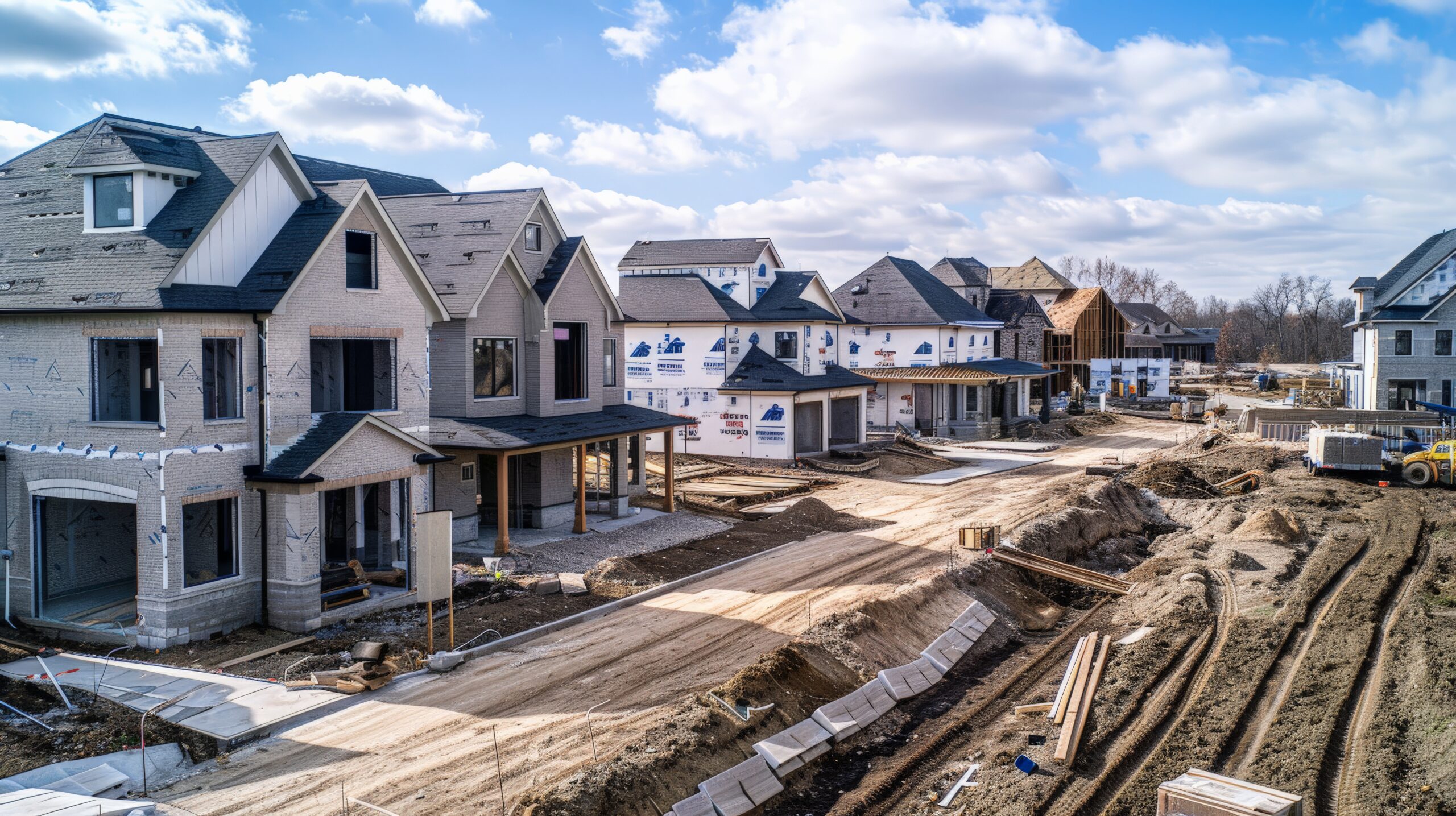
One nuance matters. Austin’s for-sale inventory is slightly lower than a year ago, according to both Zillow and the Research Center. Sellers who don’t have to move are staying put. So Austin buyers are not swimming in choices — the leverage comes from homes that have sat, sellers who need to move, and builders carrying finished inventory.
What do the market signals mean for buyers?
| Signal (source) | What it means for an Austin buyer |
|---|---|
| U.S. pending sales down 8.5% (Zillow) | Fewer competing offers; sellers wait longer for a contract |
| 27.4% of U.S. listings cut price (Zillow) | Asking prices are often negotiable, especially after 30+ days on market |
| Austin home values down 3.9% (Zillow) | Sellers are pricing against a falling comp set; use recent sales in your offer |
| Austin inventory slightly below last year (Zillow, TRERC) | Well-priced homes still sell; target stale listings and builder inventory |
| Texas median down about 2% (TRERC) | Prices are flat-to-soft, so the opportunity is in terms, not a crash |
| Payments up 6.7% YoY (Zillow) | Payment is the real obstacle, so negotiate for things that lower it |
Sources: Zillow September 2026 Market Report (U.S. and Austin metro, September 2026); Texas A&M Real Estate Research Center, Texas Housing Insight (June 2026 data). Zillow figures are index estimates and are not combined with MLS figures.
Where in Austin is buyer leverage showing up?
Austin is not one market. A buyer in Circle C faces a very different negotiation than a buyer in East Austin or Leander. Here is how leverage tends to look across the metro right now.
Downtown, Rainey Street and the Domain
High-rise condos and newer townhomes added a lot of supply in recent years. Competing units in the same building give buyers a concrete basis to ask for closing-cost credits or help with HOA dues. Ask your agent how many comparable units are listed in the same tower.
East Austin and Mueller
New construction and renovated older homes sit side by side, so you can compare price per square foot, finish quality and HOA costs block by block. That comparison shopping works in your favor when a seller is anchored to last year’s pricing.
South Austin, Zilker and Circle C
Established neighborhoods with strong schools and short commutes tend to hold value better. Leverage here is narrower: well-priced homes still move, but overpriced listings sit and get reduced. Watch for homes past 30 days on market.
Round Rock, Cedar Park, Leander, Pflugerville and Georgetown
Master-planned communities in Williamson County carry heavy builder inventory. Builders would rather fund a rate buydown or closing costs than cut the base price, because a price cut resets the comps for every other home in the subdivision. That gives you room to ask for payment-lowering incentives on finished, move-in-ready homes.
Kyle, Buda and Manor
Newer communities along the I-35 and SH-130 corridors offer relative affordability compared with central Austin, and the same builder-incentive dynamics apply. First-time buyers often find their best payment here. If that is you, our Texas first-time homebuyer guide walks through down payment options.
Austin’s job base helps explain why demand has not disappeared. Employers such as Tesla, Dell, Apple, Samsung, the University of Texas and state government anchor household incomes across the metro. But uneven tech hiring has made many buyers cautious, and that caution is part of what gives prepared buyers room to negotiate.
For the full picture of financing across the metro, see our Austin mortgage broker guide.
What would a seller credit do for your Austin payment?
Adam and his team will run the price-cut and seller-credit scenarios side by side before you write an offer.
LET’S TALKShould you ask for a lower price or a seller credit?

The biggest mistake in a slow market is spending your leverage on the wrong thing. At late-September rate levels, a $10,000 price cut lowers a 30-year principal-and-interest payment by only about $68 a month. That same $10,000 delivered as a seller credit toward a rate buydown can do far more in the early years.
Example: on a $400,000 home with 20% down (a $320,000 loan), a temporary 2-1 buydown lowers the principal-and-interest payment by about $416 a month in year one and $213 a month in year two. That is roughly $7,550 in total savings — which a 2% seller credit of $8,000 could cover. These are illustrative numbers, not a quote or commitment to lend.
| Use of $8,000–$10,000 in leverage | What it does | Best for |
|---|---|---|
| Price reduction | Lowers the loan amount and payment slightly for the life of the loan | Long-term owners who will never refinance |
| Temporary 2-1 buydown | Large payment drop in years one and two | Buyers expecting income growth or a future refinance |
| Permanent buydown | Smaller payment drop that lasts the full term | Buyers planning to stay 7+ years |
| Closing-cost credit | Cuts the cash you need at the closing table | First-time buyers and anyone short on cash to close |
Seller-credit limits vary by loan type and down payment. Conventional, FHA and VA loans each cap concessions differently, so structure the credit before you sign the contract.
Other ways to use your leverage:
- Ask the seller to pay closing costs, prepaid taxes and insurance, or the owner’s title policy.
- Negotiate repairs after the inspection rather than accepting the home as-is.
- Request a longer option period or a closing date that fits your move.
- Ask builders for a permanent rate buydown on finished inventory.
Want to see your own numbers first? Try our mortgage calculator with and without a price cut.
How can Austin buyers turn a slow market into real savings?
- Get fully pre-approved first. A verified pre-approval shows the seller you can close, which is what earns concessions. Sellers rarely give credits to buyers who look uncertain.
- Target homes with days on market. Listings past 30 days, or with at least one price reduction, have the most motivated sellers.
- Run both scenarios before you offer. Compare a price cut against a seller credit for your exact loan so you ask for the option that saves the most.
- Write the credit into the contract. State the dollar amount and that it may be used toward closing costs, prepaids and rate buydown, within your loan program’s limits.
- Compare lenders on the final structure. The same seller credit can buy a different payment at different lenders. Shopping multiple lenders is where the last few hundred dollars a month are won.
Should you wait for rates to drop before buying in Austin?
Waiting is a bet on the direction of rates. Zillow’s own report notes that rates could fall as quickly as they rose. If they do, buyers come back and today’s leverage fades — you may get a lower rate but pay more for the house and lose the seller credit. If rates keep climbing, your payment grows while you wait.
A balanced approach: buy a home whose payment fits your budget today, negotiate hard on terms, and plan to refinance if rates improve. Refinancing is never guaranteed, so the starting payment has to work on its own.
Why does a mortgage broker help in a slower market?
When deals take longer and sellers negotiate, financing flexibility becomes your advantage. A bank can only offer its own products and pricing. As a 100% mortgage broker, Adam and his team shop multiple lenders that compete for your loan, so you can compare conventional, FHA and VA options, buydown structures and fees side by side. We work for you, not a bank.
- No upfront credit check to start the conversation.
- Structure and strategy first — we model the credit before you negotiate it.
- Education-first approach so you understand every option.
- Dedicated processor — the same people from application to closing.
- Lender for life with an annual real estate review, including a refinance check if rates fall.
Frequently asked questions about the Austin housing market
Is it a buyer’s market in Austin right now? +
Are there more homes for sale in Austin than last year? +
Should I ask for a lower price or a seller credit? +
What is a 2-1 buydown and how much can it save? +
Will Austin home prices drop further this winter? +
Do Austin-area builders offer better deals than resale sellers? +
Can I refinance if rates fall after I buy? +
Do you check my credit before we talk? +
Why use a mortgage broker instead of a bank in Austin? +

Adam Bartling
Texas Mortgage Broker · Loan Officer NMLS# 2213358
Retired U.S. Army Captain with 22 years in the Texas Army National Guard and a licensed Texas mortgage broker working exclusively in Texas. I shop multiple lenders so they compete for your business, take an education-first approach, and keep the same dedicated processor on your file from application to closing. Verify my license at NMLS Consumer Access.
Sources: Zillow September 2026 Market Report (released October 2026); Freddie Mac Primary Mortgage Market Survey; Texas A&M Real Estate Research Center, Texas Housing Insight (June 2026 data). Payment examples are illustrative principal-and-interest estimates and are not an offer or commitment to lend.
Adam Bartling | Texas Mortgage Broker · Loan Officer NMLS# 2213358 · Serving Texas · Equal Housing Lender